Property price growth in Cyprus: why prices are rising and where they are rising fastest
RPPI Q1 2025: Paphos up 12.9 per cent, Famagusta up 7.3, Larnaca up 5.9. Where property values in Cyprus are rising fastest and how sustainable the growth is.
The Central Bank's price index, regional hotspots, market drivers: what is currently driving capital appreciation in Cyprus and how sustainable it is. As of April 2026. All price data are based on the Residential Property Price Index (RPPI) of the Central Bank of Cyprus (Q1 2025), the Department of Lands and Surveys and local market observations. We update this article regularly. We do not provide investment advice. Past increases in value are no guarantee of future performance.
Why prices are rising
The Cypriot property market set a record in 2024: EUR 5.71 billion in transaction volume. 2025 added a further 15 per cent. In May 2025, 1,664 properties were sold, the highest monthly figure for 17 years. But price growth is not evenly distributed across the island. Anyone who invests shrewdly makes use of the regional differences.
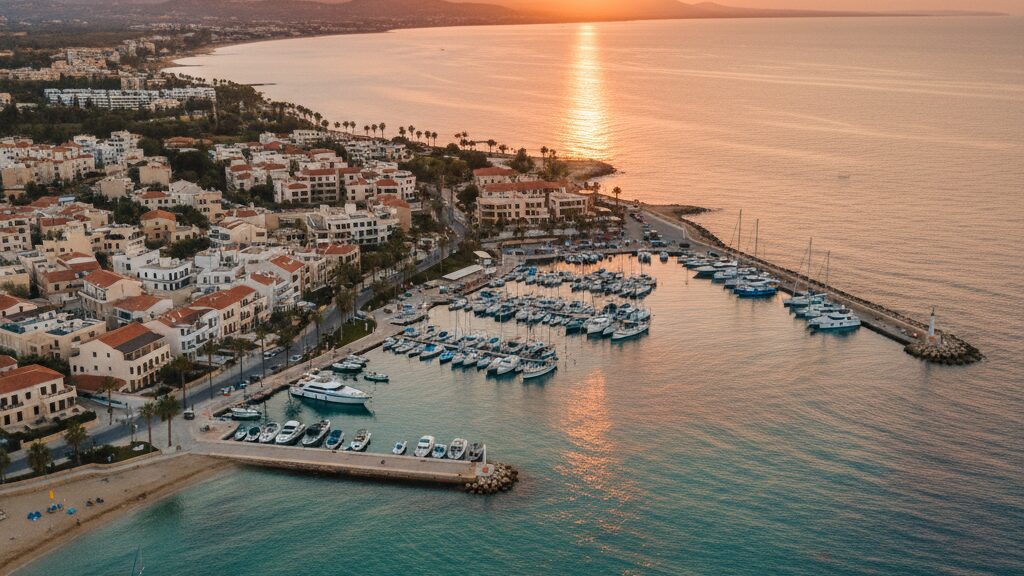
Paphos: the front-runner (up 12.9 per cent a year)
Paphos is the region with the strongest capital appreciation in Cyprus (up 12.9 per cent in the overall RPPI, Q1 2025). The reasons are easy to understand:
- International demand: 44 per cent of all buyers in Paphos are foreigners, the highest share of any district
- DACH buyers: Paphos is the first port of call for Germans, Austrians and Swiss. German-speaking doctors, authorities and an established expat community lower the barrier to entry
- Paphos Marina (EUR 230 million): A 165,000 m² marina for up to 1,000 boats is being developed in Kissonerga. Four bidders are in the running, construction is expected to start in 2027, with completion by 2029. A hotel, residential and commercial space are part of the project
- Airport expansion (EUR 220 million): Since November 2025 Paphos airport has been undergoing a 30 per cent expansion. Two new rapid-exit taxiways, six additional gates, larger security and arrivals halls. Capacity will rise to 5 million passengers a year (completion mid-2027)
- A7 motorway: The route from Paphos to Polis Chrysochous is being upgraded to a four-lane motorway. First section with two 720-metre tunnels and five bridges. Second phase out to tender from February 2026
- Tight supply: Construction activity is not keeping pace with demand. Permit procedures take 12 to 18 months
Prices per square metre in Paphos: EUR 2,500 to 3,500, depending on location and type of property. In Coral Bay and Pegeia (sea view) up to EUR 4,500 per m². For comparison: Munich is at over EUR 8,500 per m².
Famagusta: tourism market with fluctuations (up 7.3 per cent)
Famagusta (the south, with Protaras and Ayia Napa) has established itself as a premium tourist destination. In Q1 2025 the district recorded appreciation of 7.3 per cent in the overall RPPI, putting it in second place behind Paphos. In the long term the drivers remain intact:
- The island's strongest tourism district (highest occupancy for holiday apartments)
- Casino resort development (City of Dreams Mediterranean)
- Paralimni Marina as an infrastructure project in its final phase
- Relatively low entry prices: apartments from around EUR 145,000
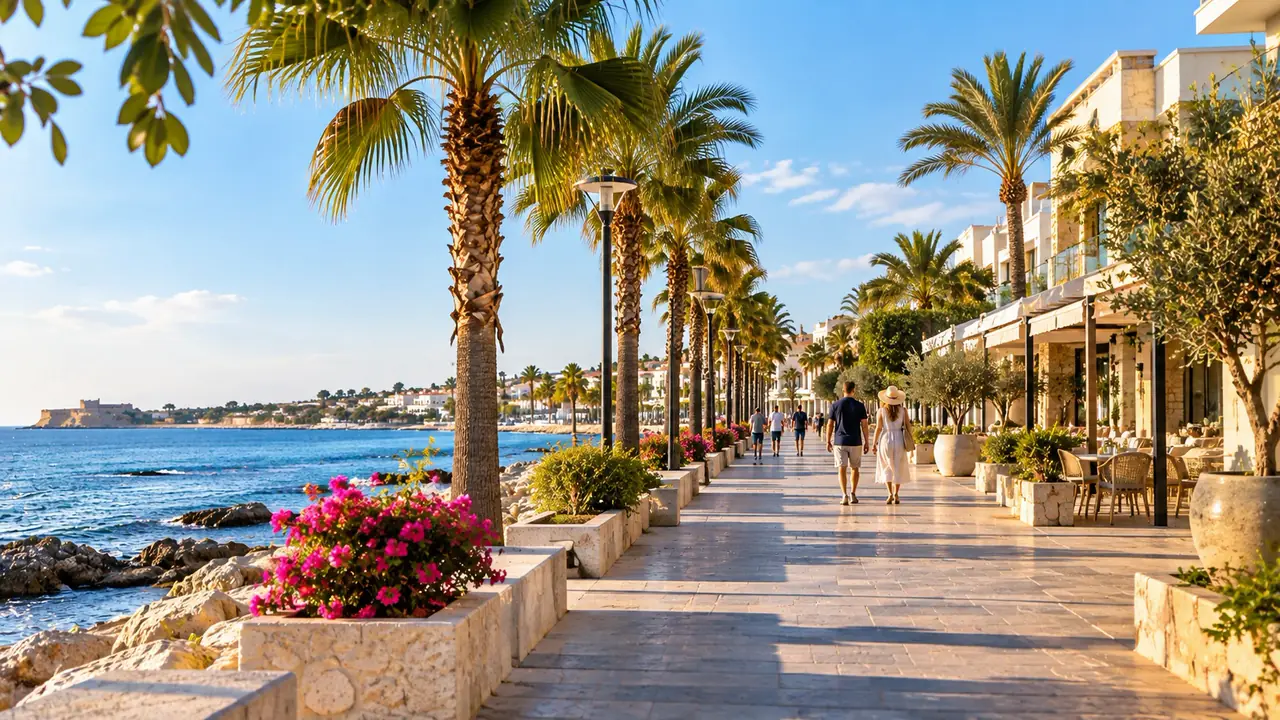
Larnaca: the rising star with solid growth (up 5.9 per cent)
Larnaca was long regarded as the underrated region. That is now changing. The overall RPPI rose by 5.9 per cent year on year in Q1 2025. New-build sales increased by 40 per cent in 2024.
- New marina: The Larnaca Marina (650 berths planned, luxury apartments, hotels) is being implemented. Estimated revenue: EUR 120 million per year, 4,000 new jobs. Completion is taking place in phases, after the project was placed under state supervision in the interim
- Proximity to the airport: The international airport is right in the city
- Price level: around EUR 2,200 per m². That is a third below Limassol and leaves room for appreciation
- Displacement effect: Buyers for whom Limassol has become too expensive are switching to Larnaca
For DACH investors with a smaller budget, Larnaca is interesting: a two-room apartment costs EUR 140,000 to 200,000 and yields 4.5 to 6 per cent in rent.
Limassol: the premium destination (up 5.7 per cent)
Limassol is the most expensive city in Cyprus and the island's financial centre. At plus 5.7 per cent in the overall RPPI (Q1 2025), the district is growing solidly. At the higher price level, that still means a lot in absolute figures:
- High-rise boom: Dozens of towers right by the sea (One, Trilogy, Neo, Limassol Del Mar)
- Business hub: International firms, forex brokers, shipping companies
- Russian and Israeli demand: Limassol has the most diverse buyer base on the island
- Premium segment: Penthouse apartments from EUR 1 million, villas from EUR 2 million
Prices per square metre: EUR 3,500 on average, up to EUR 8,000 near the beach. The rental yield is 4 to 5 per cent, lower than in Paphos but with more stable performance in value.
Nicosia: the insider tip for rental yield
The capital records smaller price increases than the coastal cities but offers a different profile:
- Cheapest entry point: around EUR 1,800 per m²
- Stable rental demand: university, government, embassies, local economy
- No seasonal business: long-term tenants dominate, fewer vacancies
- Capital appreciation: a more moderate but steady rise. Less speculative than the coastal regions
What is driving prices? The five factors
1. International buyers
41 per cent of all property purchases in Cyprus are made by foreigners. The number of title transfers to foreign buyers has risen from 873 (2020) to 2,511 (2024). That is an increase of 188 per cent in four years. And the trend is accelerating.
2. Massive infrastructure investment
For Paphos alone the government has announced more than 75 projects with a total volume of EUR 230 million. On top of that come the Paphos Marina (up to 1,000 berths), the airport expansion to 5 million passengers (EUR 220 million) and the upgrade of the A7 motorway to Polis Chrysochous. Then there are the Larnaca Marina, the casino resort in Limassol, hospitals and international schools. Every major project brings further investment in its wake.
3. Tax reform 2026
The abolition of stamp duty, the reduction of SDC on dividends (from 17 to 5 per cent) and the retention of non-dom status keep Cyprus attractive to wealthy new arrivals. That supports demand in the upper price segment. Details in the tax guide.
4. Shortage of supply
Construction activity cannot meet demand. Permit procedures are slow, plots in coastal locations are becoming scarce, and rising construction costs (materials, labour) are holding back new projects. The result: upward pressure on prices.
5. Expected Schengen accession
Cyprus is a member of the EU but not yet in the Schengen area. Accession (expected for 2026) would considerably increase the value of Cypriot residence permits and generate further demand.
Risks: when prices can also fall
An honest guide must also name the risks:
- Interest rate risk: Rising interest rates in the eurozone can dampen demand, particularly for financed purchases
- Political risks: The division of the island remains a factor. Changes to the status quo can affect regional prices
- Oversupply in the high-price segment: In Limassol, individual luxury projects are standing empty for longer than expected. The premium segment is more susceptible to corrections
- Regulation: Changes to residence permits or tax advantages can reduce the attractiveness for foreign buyers
- Concentration risk: Paphos is heavily dependent on DACH buyers. An economic downturn in Germany can slow demand
Recommendation by investor profile
There is no answer that is right across the board, but there are clear tendencies:
| Investor profile | Suitable region | Reasoning |
|---|---|---|
| Maximum capital appreciation | Paphos (Pegeia, Coral Bay, Konia) | Highest growth, strongest demand, high entry prices |
| Best value for money | Larnaca | Lower entry prices, solid growth, marina project as a catalyst |
| Most stable rental yield | Nicosia | Less appreciation, constant demand, no seasonal dependence |
| Premium investment | Limassol | For buyers with a higher budget, the island's financial centre |
| Tourism focus | Famagusta (Protaras, Ayia Napa) | Highest occupancy for short-term lets, casino effect |
Worked example: EUR 250,000 apartment, 5-year holding period
| Region | Appreciation per year | Value after 5 years | Gain |
|---|---|---|---|
| Paphos (+12.9 per cent) | +EUR 32,250 | EUR 418,300 | EUR 168,300 |
| Famagusta (+7.3 per cent) | +EUR 18,250 | EUR 356,700 | EUR 106,700 |
| Larnaca (+5.9 per cent) | +EUR 14,750 | EUR 332,900 | EUR 82,900 |
| Limassol (+5.7 per cent) | +EUR 14,250 | EUR 331,600 | EUR 81,600 |
Simplified calculation based on the overall RPPI (Q1 2025, Central Bank of Cyprus). Actual performance may differ. Past increases in value are no guarantee of future performance.
Summary
The Cypriot property market is growing on a broad front, but not evenly. Paphos leads with plus 12.9 per cent a year, followed by Famagusta, Larnaca and Limassol. Nicosia trails far behind at plus 0.7 per cent. The drivers are structural: high international demand, massive infrastructure projects (marinas, airport expansion, A7 motorway), the 2026 tax reform and a persistent shortage of supply.
Anyone looking for maximum capital appreciation goes to Paphos. Anyone who wants the best value for money ends up in Larnaca. Anyone who prefers a stable rental yield chooses Nicosia. Premium buyers stay in Limassol, tourism investors in Famagusta. No region is the best across the board; it depends on your profile.
The risks remain real: rising interest rates, political factors, possible corrections in the luxury segment. Anyone who plans for a holding period of five to ten years and does not bet on just one region reduces the concentration risk.
Sources and further links
- Central Bank of Cyprus, Residential Property Price Index (RPPI) — Q1 2025, price trends by district
- Cyprus Department of Lands and Surveys — transaction volume, title transfers
- RICS Cyprus Property Price Index — alternative price statistics by property type
- KPMG Cyprus Real Estate Outlook — annual market analysis
- Cyprus Statistical Service (CyStat) — official economic data, tourism statistics
- Cyprus Tax Department — Law 239(I)/2025 and the 2026 tax reform
- Ministry of Transport, Communications and Works — A7 motorway, airport projects